Awnings & shading
Solar Awning in Ierapetra, Crete
Protection from the sun that also generates energy — the first awning that cuts your electricity bill.
Solar Awning
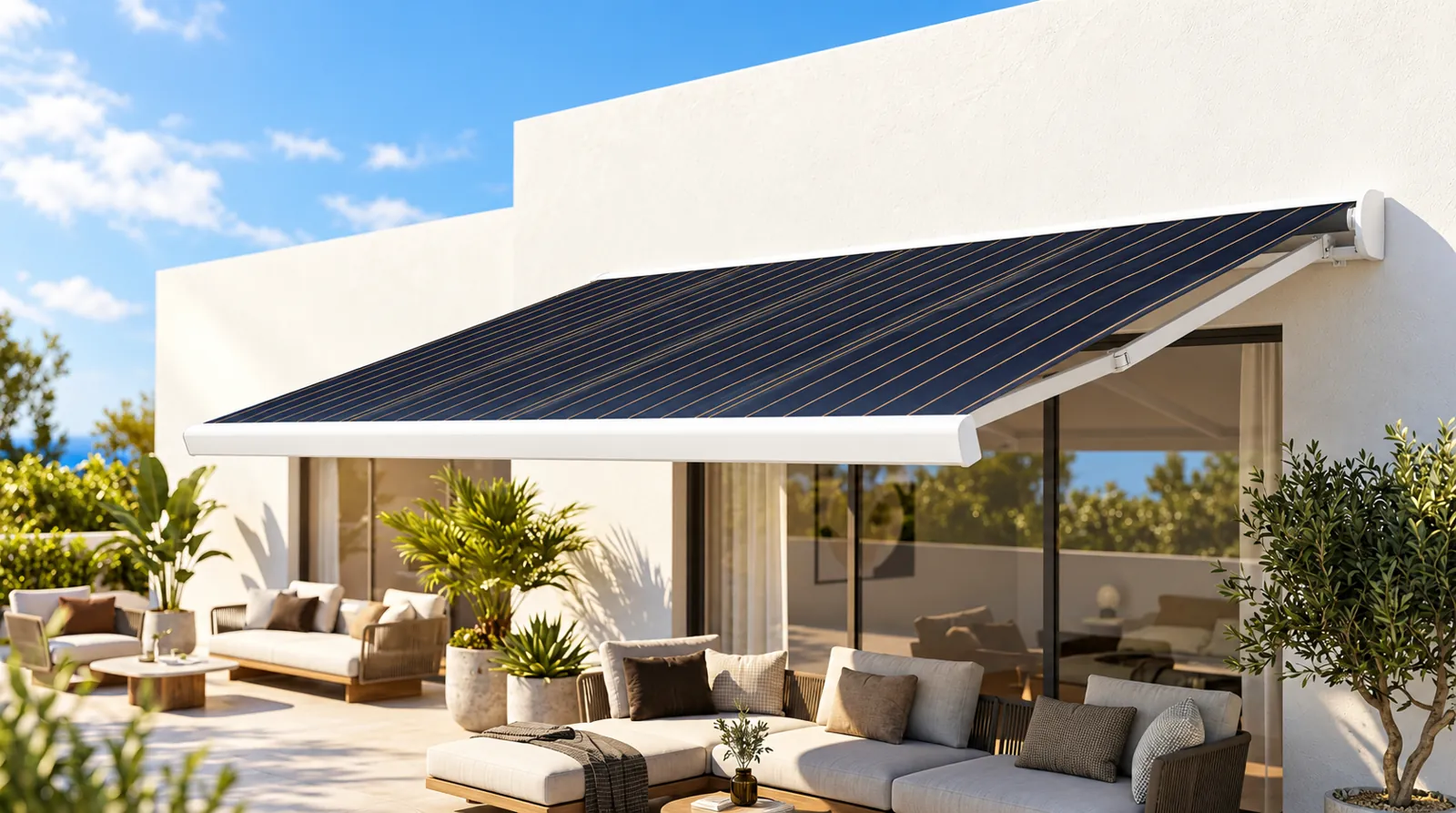
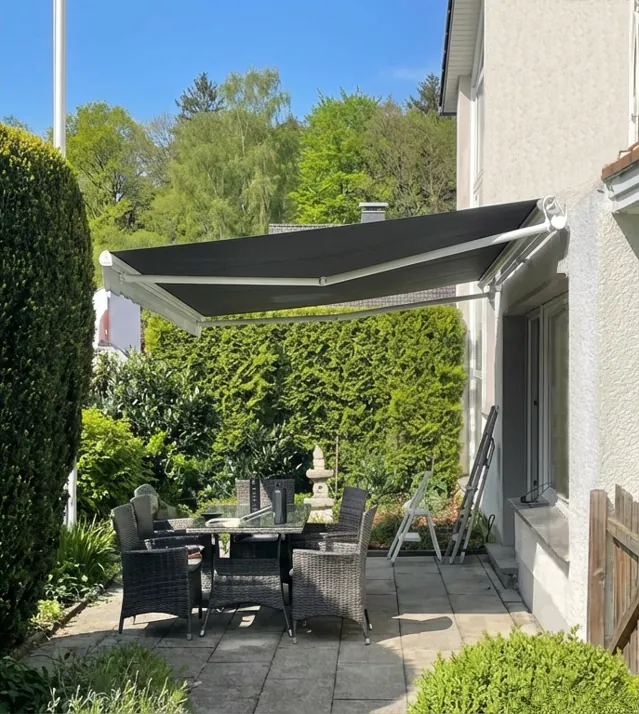
A solar awning works like any motorised folding-arm awning: it extends, retracts and shades your terrace or balcony. The difference is in the fabric. Flexible photovoltaic cells are built into the cover, thin enough for it to roll onto the bar exactly as usual.
While the awning is out, the very surface giving you shade generates electricity. A small inverter turns it into 230V and feeds it back into the house through an ordinary socket — with no work on the roof and no changes to the consumer unit.
The systems are made by the German company SolarMarkise; we plan, fix and set them up ourselves, with the same care we have given every awning since 1983. If your spot is not right for a solar awning we will say so plainly and suggest a cassette awning or a retractable pergola instead.
Ideal for
Why a solar awning?
Three things that make the difference in a house in Ierapetra.
Shade and energy at once
The same surface that keeps you cool also generates power. No roof space is needed and nothing changes about the look of the building.
Less electricity from the grid
Output peaks at exactly the hours the fridge, the air conditioning and the pool pump are running.
A simple installation
It plugs into an ordinary socket through an inverter. No roof work, no changes to the consumer unit.
The models
Four sizes, so there is one to suit a balcony, a terrace or a shop courtyard.
| Model | Output | Annual yield* | Width × projection |
|---|---|---|---|
| M – short projection | 900 Wp | up to 800 kWh | 3.30 × 2.00 m |
| M | 1,350 Wp | up to 1,200 kWh | 3.51 × 3.00 m |
| L – short projection | 1,200 Wp | up to 1,067 kWh | 4.35 × 2.00 m |
| L | 1,800 Wp | up to 1,600 kWh | 4.35 × 3.00 m |
* Indicative annual yield quoted by the manufacturer for central European conditions — sunshine in Crete is considerably stronger. Every model includes motorised operation, a wind sensor and a 10-year warranty.
How it works
Tap each step to see what it does.
1Solar awning
The photovoltaic cells in the fabric turn light into direct current (DC) for as long as the awning is out.
2Inverter
A small inverter, tucked away beside the awning, converts the direct current into 230V alternating current — the same as the grid.
3230V socket
The inverter plugs into an ordinary socket and the energy flows into the house circuit, feeding in up to 800 W.
4Your appliances
Fridge, coffee machine, lights, air conditioning: whatever is running draws from the awning first and only takes the difference from the grid.
5Batteryoptional
A small battery can be added as an option, so that surplus energy from the middle of the day is used in the evening.
Photos: Solar Awning
Photos of SolarMarkise solar awning systems. Click a photo to enlarge it.
A fabric, not a panel
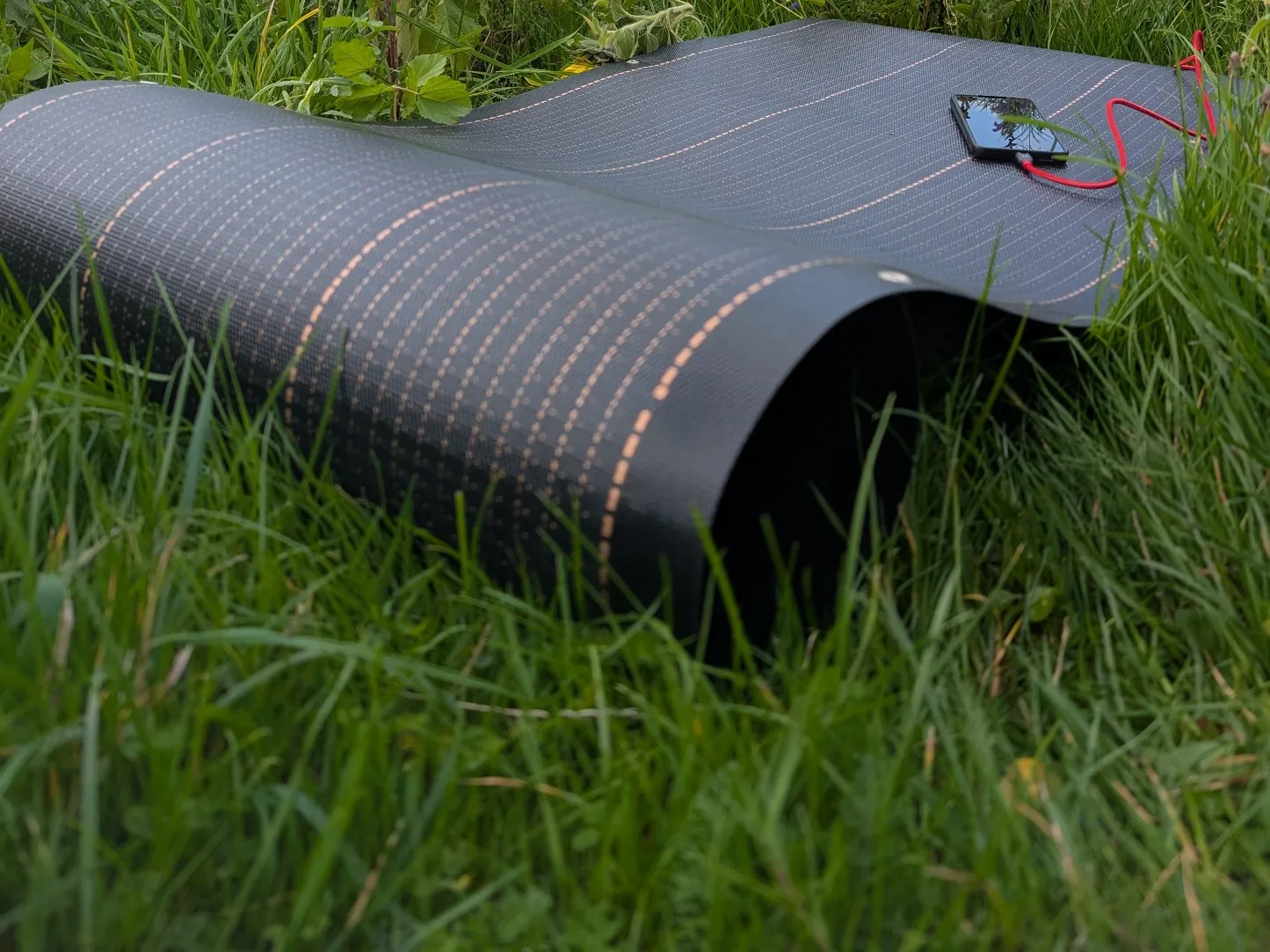
The photovoltaic layer is built into the fabric rather than bolted onto it. The cover is about 1.6 mm thick, weighs 2.2 kg/m² and rolls onto the awning bar exactly as a normal cover does.
The manufacturer has tested it over more than 10,000 open-and-close cycles and backs it with a 10-year warranty. From underneath, your terrace looks and feels just like it would beneath any other awning.
Solar awning systems are made by SolarMarkise. There is more at meine-solarmarkise.de (in German).
Frequently asked questions
How much electricity does a solar awning produce?
It depends on the size, the orientation and how shaded the spot is. Models start at 900 Wp and go up to 1,800 Wp. The manufacturer quotes an indicative annual yield of 800–1,600 kWh for central European conditions; sunshine in Crete is considerably stronger, so real output is usually higher. We give you an accurate estimate after the site survey.
How does it connect to the house?
Through a small inverter that converts the awning's direct current into 230V alternating current and plugs into an ordinary socket, feeding in up to 800 W. No roof work and no changes to the consumer unit are needed. Small photovoltaic installations are subject to specific rules, and we will tell you what applies in your case before installation.
Does it generate power when the awning is retracted?
No — the fabric has to be out to see the sun. That is why a solar awning makes most sense where you want shade all day anyway: on south-facing terraces.
Will it stand up to wind and salt?
The fabric is reinforced and weighs around 2.2 kg/m². As with every awning we fit near the sea, we choose fixings and fittings suited to a coastal setting.
Can I store the power for the evening?
Yes. A small battery can be added as an option, so that surplus energy from the middle of the day is used in the evening.
Other shading systems
Every space calls for its own solution. Take a look at the other systems we install.
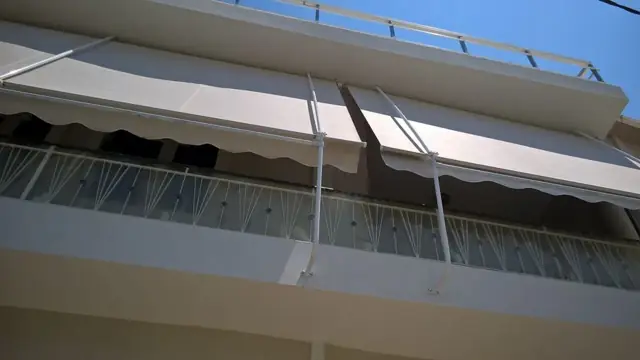
Balcony Awnings with Support Arms
Metal arms braced against the railing or wall. Built for wind, with a crank or a motor.Find out more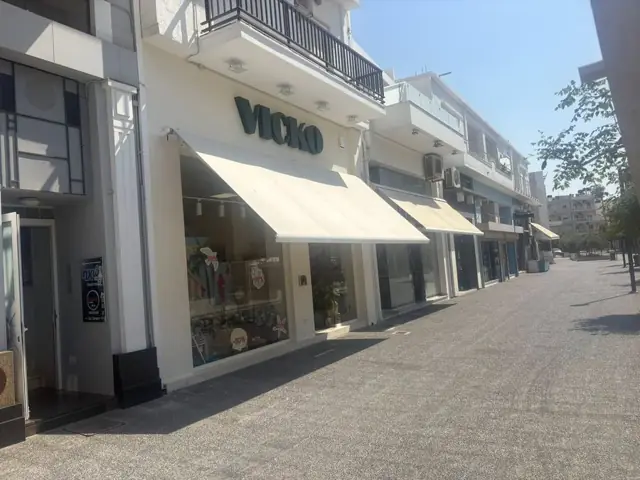
Cassette & Folding-Arm Awnings
A closed aluminium case or open folding arms. Hand-operated or with a SOMFY motor.Find out more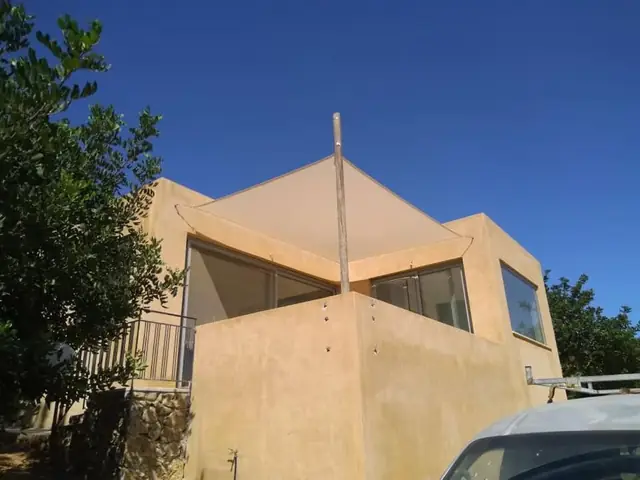
Tensioned Shade Sails
Tensioned sails and fabric panels sliding on tracks or cables, for wide openings.Find out more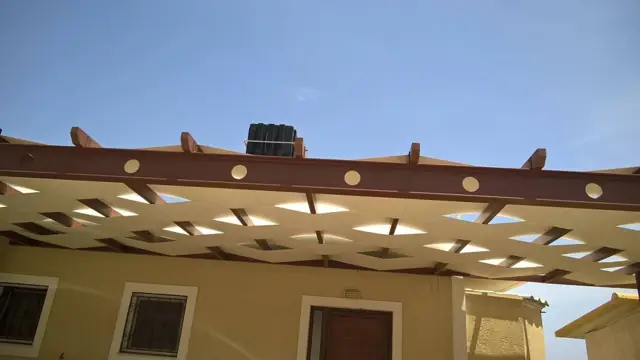
Pergola Shade Fabrics
Woven and wave-form fabrics for wooden or metal pergolas and courtyards.Find out more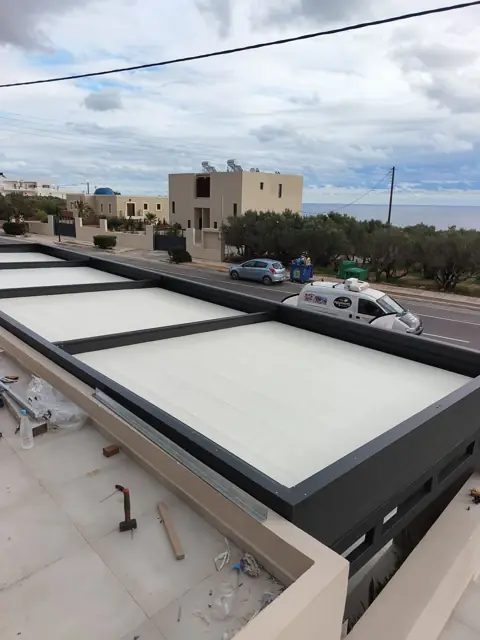
Retractable Pergola Awnings
Aluminium frame with waterproof, motorised sliding fabric. For sun and for rain.Find out more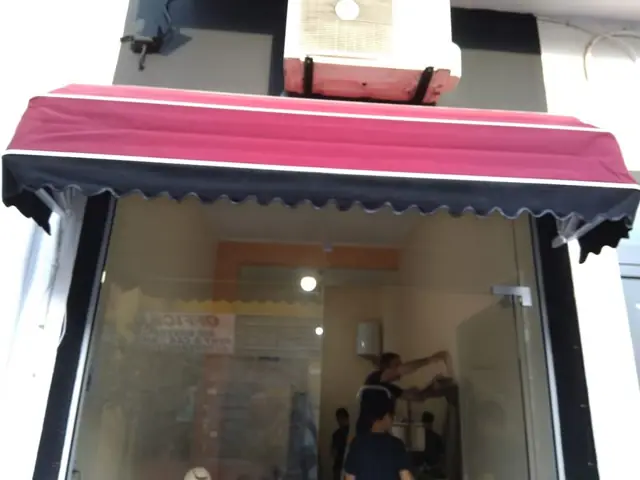
Dome Awnings (Shopfront Canopies)
Curved canopies on a fixed frame, for shop windows, entrances and windows.Find out moreBook a free survey and quote
We come to you, show you fabric samples and give you an exact quote — with no obligation at all.